An NDT sampling plan for cast parts must define more than a percentage. If your RFQ only says “10% X-ray,” the supplier still does not know which parts are selected, which zones are examined, what discontinuities matter, which acceptance level applies, or what happens when one sampled casting fails.
The correct plan starts with service risk and the governing drawing, code, material specification, and customer requirements. Pressure-boundary, safety-critical, high-speed rotating, fatigue-loaded, or failure-sensitive castings may require 100% examination of specified zones. Stable lower-risk production may permit lot sampling, but only when your engineering and quality authorities approve the residual risk.
This article is written for OEM sourcing teams, quality engineers, and product engineers buying custom investment cast parts where NDT affects cost, lead time, shipment release, and liability. The business goal is simple: help you write an RFQ that a foundry can quote accurately and a quality team can enforce consistently.

What should an NDT sampling plan for cast parts define?
Q: Which information turns a percentage into an executable plan?
A: Define the lot, sample, method, zone, timing, procedure, personnel, acceptance criteria, records, and reaction to failure.
A complete plan should answer:
- Which part number, drawing revision, alloy, heat-treatment condition, and service category are covered?
- How is one inspection lot formed—by heat, pour, tree, heat-treatment batch, machining batch, or shipment?
- Which NDT method applies to which material and expected discontinuity?
- Is coverage 100% of each selected part, limited to critical zones, or based on defined views and scan paths?
- How are sample parts selected so operators cannot choose the easiest pieces?
- Which written procedure, equipment controls, and personnel qualification requirements apply?
- Which reference images, severity level, code, drawing note, or customer standard controls acceptance?
- What happens after one reject—lot rejection, expanded sampling, 100% screening, investigation, or requalification?
These decisions affect quotation. A supplier cannot price “NDT included” accurately when the method, views, sensitivity, sample quantity, report package, and acceptance criteria are unknown. If you define these items early, you reduce later arguments about inspection cost, delivery timing, and whether a reported indication is acceptable.
When should buyers require 100% NDT?
Q: Is 100% examination always safer?
A: It provides broader screening of the specified scope, but its need should be tied to consequence of failure, process risk, detectability, and contractual requirements.
Consider 100% NDT when a discontinuity in the specified zone could cause loss of pressure containment, fracture, leakage, unsafe rotation, critical fatigue failure, or another unacceptable service event. Codes, end-user specifications, qualification plans, or regulatory requirements may make the decision mandatory.
Also consider full examination during:
- initial process qualification or first production lots;
- containment after an NDT reject or field failure;
- production following a significant tooling, gating, melting, heat-treatment, or supplier change;
- lots showing unstable process or dimensional results; and
- customer-required revalidation after an extended production interruption.
“100%” still needs a defined object. It may mean every casting receives specified radiographic views, every pressure boundary receives surface examination, or every critical zone receives an approved ultrasonic scan. It does not automatically mean every cubic millimeter is equally inspectable.
When can lot sampling be appropriate?
Q: What conditions support a sampling approach?
A: Sampling is more defensible when the process is stable, the lot is homogeneous and traceable, the part is not governed by a stricter requirement, and the consequence of an undetected condition is acceptable to the design authority.
A lot should represent parts produced under sufficiently common conditions. Combining different material heats, tooling revisions, casting routes, heat-treatment batches, repair statuses, or subcontractors into one sampling population can hide variation.
ISO 2859-1:2026 provides AQL-indexed sampling schemes for lot-by-lot inspection by attributes, including single, double, or multiple sampling and rules for normal, tightened, reduced, or skip-lot inspection. It can provide a statistical framework where the contract adopts it. It does not decide whether NDT sampling is technically permitted for a critical casting.
The buyer should approve:
- lot formation and maximum lot size;
- random sample selection method;
- inspection level and applicable AQL or customer plan;
- accept and reject numbers;
- switching rules between normal, tightened, reduced, and suspended sampling; and
- disposition of unexamined parts when a sample fails.
Do not choose an AQL simply because it appears in a generic incoming-inspection table. Producer and consumer risk must match the part’s actual service consequence.
How should 100% and lot inspection be compared?
Q: What is the practical difference for an OEM sourcing team?
A: The difference is not only inspection cost; it is the amount of product directly examined and the residual risk accepted for unexamined parts.
| Decision factor | 100% specified NDT | Lot sampling |
|---|---|---|
| Product directly examined | Every part within the defined method and coverage | Only randomly selected parts |
| Typical use direction | Critical service, qualification, containment, customer mandate | Approved stable production with acceptable residual risk |
| Lot-definition sensitivity | Still required for traceability and investigation | Central to whether the sample represents the lot |
| Reaction to one reject | Reject part plus process/lot impact review | Follow predefined lot rejection or escalation rule |
| Main limitation | Method and geometry still limit detectability | Unexamined parts retain residual uncertainty |
Neither option replaces process control. NDT screens for specified discontinuities under defined conditions; it cannot repair an unstable wax, shell, melting, pouring, or finishing process.
How do RT, UT, MT, and PT differ?
Q: Can buyers select one universal NDT method for every casting?
A: No. The method must fit the material, geometry, expected discontinuity, access, section thickness, surface condition, and governing requirement.
| Method | Primary use direction | Important limitation |
|---|---|---|
| RT / X-ray | Image internal structure; often effective for volumetric discontinuities | Geometry, orientation, thickness, coverage, and image quality affect detectability |
| UT | Evaluate certain internal or subsurface conditions using sound | Casting geometry, grain structure, surface access, and calibration can restrict applicability |
| MT / MPT | Detect surface or near-surface discontinuities in ferromagnetic material | Not applicable to non-ferromagnetic alloys such as austenitic stainless steels |
| PT / LPI | Reveal surface-breaking discontinuities on suitable nonporous surfaces | Cannot reveal discontinuities that do not break the examined surface |
Matson lists X-ray, UT, and magnetic particle testing among its in-house inspection resources. Method availability does not mean that every method suits every Matson alloy or part. Your RFQ should identify the governing practice, acceptance basis, and required personnel qualification before the casting route is confirmed.
Why are test method and acceptance criteria separate?
Q: If the drawing calls ASTM E1030, is acceptance fully defined?
A: No. ASTM E1030/E1030M controls radiographic examination and image quality; it explicitly states that it is not intended to control product acceptability.
The purchase requirement must add the acceptance basis. Depending on the casting material and application, that may involve reference radiographs, severity levels, zone-specific limits, a product specification, code, or customer standard. The parties must also agree on views, coverage, image-quality indicators, reporting, and any alternate technique.
ASTM A903/A903M provides surface acceptance standards for steel castings examined by magnetic particle or liquid penetrant methods when the inquiry, contract, order, or specification calls it out. Referencing a general method such as ASTM E1444 or E165 without an acceptance requirement can still leave the reject/accept decision undefined.
The NDT procedure and the product acceptance standard should be named separately in the inspection plan. Record the revision of each document when the customer requires revision control.
How should critical zones and coverage be marked?
Q: Is “inspect the casting” a workable coverage instruction?
A: No. Use a drawing, inspection map, or approved technique sheet to identify zones and required views or scan paths.
Critical zones may include pressure walls, fillets under cyclic load, hub-to-vane transitions, bearing areas, weld-repair zones, sealing regions, or sections where process simulation and qualification identified risk. Different zones may use different methods or acceptance levels.
For radiography, provide enough views to achieve the agreed coverage within geometry limitations. For UT, define accessible surfaces, calibration, scan direction, and zones. For MT or PT, identify whether examination occurs before or after machining, grinding, heat treatment, or repair.
Zone-based NDT can be more meaningful than applying the same nominal percentage to every surface. It focuses inspection effort where a discontinuity has the greatest functional consequence.
How should sample parts be selected?
Q: Can the foundry choose any convenient castings?
A: Selection should be random or follow a customer-approved systematic method that represents the full lot.
Do not sample only parts from the top of a container or the cleanest visible tree. The plan may need representation across pours, trees, cavities, shifts, heat-treatment loads, machining fixtures, or repair statuses. The chosen sample should be identified before the NDT result is known.
Each selected part should retain a link to its heat, lot, tree or pour where required, heat-treatment batch, and later disposition. If parts cannot be individually marked, use controlled containers and records that maintain the relationship.
Matson’s investment casting first article inspection guide explains why a production-intent sample and complete configuration record matter before routine sampling begins.
What should happen after a sampled casting fails?
Q: Is it enough to replace the rejected sample with another part?
A: No. Substitution without a predefined rule destroys the statistical and technical meaning of the plan.
The contract should specify one or more reactions:
- reject or hold the complete lot;
- increase the sample according to the approved plan;
- screen 100% of the lot using the specified method and coverage;
- review related heats, pours, trees, heat-treatment loads, or repair batches;
- perform root-cause analysis and corrective action;
- return to tightened inspection for future lots; and
- notify the customer before repair, rework, use-as-is disposition, or shipment.
Screening the current lot does not by itself prove the root cause is removed. Process records from wax, shell, melting, pouring, finishing, heat treatment, and machining may need review. The corrective action should identify why the discontinuity occurred, why controls did not prevent it, and how recurrence will be monitored.
What should an NDT report contain?
Q: Is “NDT passed” sufficient evidence?
A: No. The report should identify the product, scope, method, procedure, result, acceptance basis, and traceability.
Useful report fields include:
- customer, part number, revision, purchase order, and quantity;
- material grade, heat, casting lot, and sample identification;
- NDT method, written procedure, equipment, and consumable or technique details where required;
- inspection stage, surface condition, zones, views, or scan coverage;
- applicable standard, reference image, acceptance level, and revision;
- indication location, classification, result, and disposition;
- examiner identity and required qualification/certification reference; and
- date, report number, reviewer, attachments, and retained image or data location.
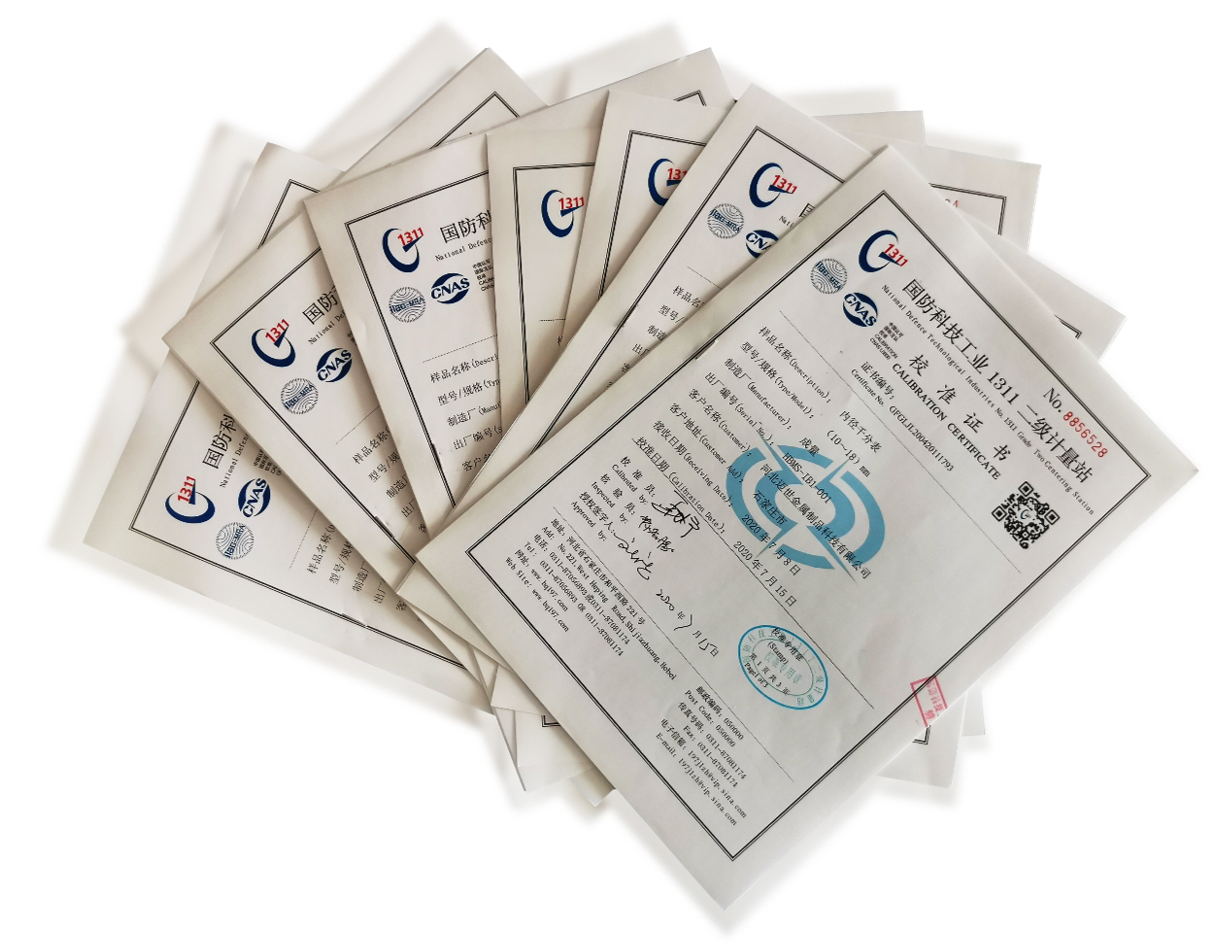
ASNT publishes standards and recommended practices for NDT personnel qualification and certification. The customer should specify the required scheme, employer written practice, level, method, vision requirements, and independent or third-party approval where applicable.
What should international buyers put in the RFQ?
Q: Which details prevent quotation disputes?
A: Put the engineering decision and the statistical decision in the same controlled requirement.
North American buyers may reference ASTM examination practices, material specifications, reference radiographs, ASME or API requirements, and ASNT personnel qualification. European buyers may use ISO or EN methods and customer-specific acceptance levels. Railway, automotive, aerospace, pump, valve, mining, and oil-and-gas customers frequently add their own critical-zone maps and change-control clauses.
State the method, lot definition, sample plan, critical zones, timing, procedure approval, personnel qualification, acceptance standard, report language, retained records, reaction to failure, repair rules, customer witness or hold points, and rules for reducing or increasing inspection.
Matson View: how to make the NDT requirement quotable
For custom investment castings, Matson prefers to review the NDT scope before tooling, not after the first lot is finished. You should confirm whether the requirement is driven by a drawing note, end-user specification, industry code, or internal quality rule. That difference changes how strictly the foundry can interpret sampling, acceptance, repair, and documentation.
Ask the foundry to separate the inspection method from the acceptance criteria in its quotation response. Do not approve a vague statement such as “X-ray included” if your part has pressure walls, machined sealing faces, fatigue-loaded fillets, or repaired zones. Send the drawing, critical-zone map, material grade, expected production quantity, and required report format together, so the NDT plan supports both engineering release and purchasing comparison.
Matson’s investment casting quality control guide covers the wider relationship between NDT, material traceability, CMM, and final release. Our factory process overview shows the production stages that should be reviewed when an NDT reject triggers investigation.
FAQ about NDT sampling for castings
Does 100% X-ray mean the entire casting is visible?
Not automatically. It means every part receives the specified radiographic examination, but actual visibility depends on defined views, geometry, orientation, section thickness, image quality, and the approved technique. If your casting has hidden transitions or heavy sections, ask for the view plan or technique sheet before treating “100% X-ray” as full-risk coverage.
Can ISO 2859-1:2026 be used for NDT sampling?
It can provide an attribute-sampling framework when adopted by the contract. It does not decide whether sampling is technically acceptable for a critical casting or override a code, drawing, material specification, or customer requirement for 100% examination. Use it only after your engineering or quality authority agrees that lot sampling is suitable for the part risk.
Can magnetic particle testing be used on stainless steel castings?
Only when the material is sufficiently ferromagnetic and the specified method applies. Austenitic stainless grades are not suitable for magnetic particle testing; liquid penetrant or another approved method may be considered for surface-breaking discontinuities. Before writing MT into the RFQ, confirm the exact stainless grade, heat-treatment condition, surface condition, and governing test standard.
Should repaired areas receive additional NDT?
Follow the governing material specification, repair procedure, code, and customer requirement. The contract should define repair authorization, excavation verification, post-repair NDT method, coverage, acceptance, heat treatment, and documentation. If repaired areas are in functional zones, do not leave the decision to shop-floor judgment; make the repair and reinspection rule visible in the purchase requirement.
Can sampling be reduced after several accepted lots?
Only under an approved plan with defined switching rules and stable performance. Customer mandates, criticality, process changes, or any adverse quality trend may prevent reduced inspection or require a return to tightened or 100% examination. If you allow reduced sampling, define exactly which events reset the plan before production begins.
What is the most common mistake in an NDT sampling requirement?
The most common mistake is specifying a percentage without defining the lot, selection method, coverage, and acceptance basis. That creates room for different interpretations between purchasing, engineering, the foundry, and the inspector. A good requirement tells everyone which risk is being controlled and what action follows if the sample does not pass.
Final Thoughts
A useful NDT sampling plan protects more than one shipment; it protects the way your casting project is quoted, inspected, documented, and approved. For custom investment castings, Matson can review drawings, critical zones, material requirements, and report expectations before production, so the inspection scope supports both technical risk control and practical OEM sourcing.
Request an NDT scope review
Send Matson your drawing, alloy, service conditions, critical-zone map, lot definition, NDT method, sampling requirement, acceptance standard, personnel qualification, repair rules, and report format. We can review whether the requested scope is executable and identify missing inputs before quotation.
Email sales@matsoncasting.com or request a quote. Final sampling and acceptance decisions remain subject to the buyer’s engineering authority and applicable code or customer specification.
— Matson Casting Team, Technical Xiao Li
Ready to Start Your Casting Project?
Send us your drawings or requirements and our engineering team will respond with a quote within 24 hours.
Send Your Inquiry Now →