Investment Casting Material Heat Traceability: An OEM Buyer’s Guide
Investment casting material heat traceability is not created by attaching one material certificate to a shipment. If a casting later shows a chemistry, heat-treatment, machining, or field issue, you need to know exactly which heat, lot, process records, and shipped parts are involved—not just which file was sent with the packing list.
Real traceability is created by maintaining an unbroken, reviewable relationship between the specified alloy, melt heat, pour or casting lot, heat-treatment load, subsequent processing, inspection results, and the parts released to the OEM. A certificate may report useful test results, but it cannot identify the affected finished parts unless the production records and physical controls preserve that connection.
This article is written for sourcing, quality, and engineering teams buying custom investment castings from overseas suppliers. The business purpose is to help you define traceability before quotation, so material certificates, inspection reports, packing labels, and finished cast parts all support the same release decision.
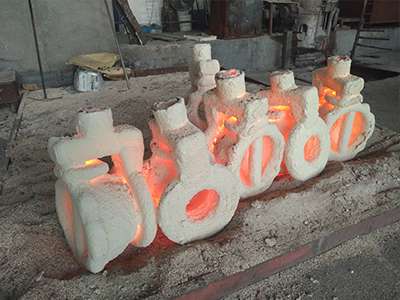
What does investment casting material heat traceability mean?
Q: What must a traceability system be able to demonstrate?
A: It should let an authorized reviewer trace a shipped part backward to its relevant material and process records, and trace an affected heat or lot forward to every part and shipment that may be involved.
Backward traceability answers: “Which melt heat, pour, heat-treatment batch, and inspection records belong to this part?” Forward traceability answers: “Where did all parts from this heat or affected process batch go?” Both directions are important. A system that can find a certificate by purchase order but cannot identify the related containers or finished parts is incomplete.
The required resolution is not identical for every project. One customer may accept heat-level traceability maintained by controlled containers. Another may require each casting to carry a heat code or unique serial number. Pressure equipment, railway, automotive, oil-and-gas, defense, and other controlled applications may add product-specific rules. Your drawing, purchase order, material specification, quality clauses, and approved control plan must define the required level.
Which identifiers make up the traceability chain?
Q: Are “heat,” “lot,” and “batch” interchangeable?
A: No. They describe different groupings, and each term should be defined in the purchase and quality requirements.
- Melt heat: metal melted and controlled as one identified heat, with associated chemistry records.
- Pour or casting lot: castings grouped under defined pouring conditions. A heat may feed more than one pour, tree group, shift, or product lot.
- Tree or cluster: castings attached to one gating system. Tree identity can be useful for process investigation even when the contract only requires heat traceability.
- Heat-treatment lot or load: parts processed together under a defined thermal cycle. One load can contain castings from multiple melt heats unless the contract prohibits this.
- Machining or processing batch: parts grouped through a machining setup, repair cycle, coating run, passivation batch, or other operation.
- Inspection lot: the defined population represented by a sample or inspection decision. It should not be assumed to equal a melt heat.
- Shipment lot: parts packed and released together. It may contain one or several approved production lots.
Do not use one generic “lot number” to hide these distinctions. The records can use a parent-child relationship: a heat can branch into several pours, each pour into multiple trees, and parts can later be regrouped into heat-treatment or shipment lots while retaining the original heat identity.
How should traceability move through the investment casting route?
Q: Where is the material identity most likely to be lost?
A: Risk increases whenever parts are separated, regrouped, transferred to a new container, sent to an outside processor, reworked, or returned from inspection.
| Production stage | Record or identifier to retain | Typical traceability risk |
|---|---|---|
| Order and material review | Part number, revision, cast grade, specification, condition, certificate and test requirements | Using a familiar commercial alloy name instead of the required cast grade |
| Melting and pouring | Heat ID, charge record where required, chemistry result, pour date, product and tree or lot relationship | Combining different heats under one undocumented production number |
| Knockout, cut-off and finishing | Heat or lot status on part, tag, traveler, rack, bin, or controlled container | Parts becoming visually similar after gates and temporary identifiers are removed |
| Heat treatment | Furnace/load ID, cycle, dates, operator or processor, linked heats and quantities | A mixed load breaking the relationship between each heat and its thermal record |
| Machining and outside processing | Transfer quantity, route step, processor, batch ID, incoming and returned status | Relabeling, partial returns, scrap replacement, or parts placed in an uncontrolled common bin |
| Inspection and release | Heat/lot, inspected quantity, sample IDs, result, nonconformance, disposition and report number | A report saying “passed” without identifying the population it covers |
| Packing and shipment | Packing list, container labels, quantity by heat/lot, certificate package and shipment reference | Consolidating approved lots without recording which parts went into each package |
A practical control has to survive the factory floor, not only look complete in an office procedure. Operators should know how to identify status, what to do when a tag is damaged, and how to prevent parts from moving until identity is restored by an authorized process.
What does a material certificate prove?
Q: Does an MTR or material certificate prove that every finished casting is correct?
A: No. It reports defined information for the material or product represented by that document. It only supports a finished casting when the certificate scope, test basis, and traceability link are valid.
ISO 10474:2013 defines types of inspection documents supplied to steel purchasers according to order requirements and is used with ISO 4990 for steel castings. ASTM casting specifications can require heat and product analysis, mechanical testing, heat treatment, and supplementary requirements depending on the material and application. The exact certificate type and contents therefore come from the purchase order and governing specification—not from the phrase “MTR required” alone.
A certificate package may include, when required:
- supplier and customer identification;
- purchase order, part number, drawing revision, quantity, and heat or lot number;
- material grade, governing specification, and required condition;
- chemical composition results and test basis;
- mechanical properties and specimen relationship where required;
- heat-treatment condition or linked thermal processing record;
- NDT, dimensional, hardness, corrosion, pressure, or other results when contractually required;
- deviations, repairs, concessions, or supplementary requirements where applicable; and
- authorized review, date, and declaration of conformity as required.
It normally does not, by itself, prove that the casting has no internal discontinuities, all dimensions meet the drawing, the correct CNC program was used, an outside process was performed correctly, or every shipped part originated from the reported heat. Those claims require separate inspection/process evidence and an intact identification chain.
How do chemistry and mechanical tests fit the chain?
Q: Can a spectrometer reading replace material traceability?
A: No. Chemistry verification can support grade conformance and help detect a mix-up, but it does not reconstruct missing production history.
An optical emission spectrometer can evaluate specified elemental composition for suitable metallic samples. The report should identify the heat, sample, method, calibration or control status, and applicable limits. The result does not prove heat treatment, microstructure, tensile properties, corrosion performance, NDT acceptance, or part identity after the sample and product have been separated.
Mechanical properties also need a defined relationship to the castings. The RFQ should state whether test bars are separately cast, attached, taken from a casting, or otherwise controlled by the governing specification; which heat and heat-treatment load they represent; and what happens when a result fails. Avoid assuming that one tensile result represents every heat and every thermal load in a shipment.
Matson lists spectrometry, metallographic examination, tensile testing, low-temperature testing, X-ray, magnetic particle testing, UT, and CMM among its inspection resources. The required tests, sampling, acceptance criteria, and record linkage must still be agreed for each project. Our broader investment casting quality control guide explains how material, NDT, and dimensional evidence serve different purposes.

How should mixed lots and outside processes be controlled?
Q: Must different melt heats always be processed separately?
A: Not necessarily, but mixing must not destroy the traceability level required by the contract.
A heat-treatment furnace load, machining fixture, passivation batch, blasting batch, or shipment may contain parts from several heats. The processor must record which quantities from each heat entered and left the operation. If the customer prohibits mixed loads, requires test specimens to accompany each heat, or requires individual serialization, those conditions take priority.
Subcontract processing creates a common break point. The purchase order to the outside processor should carry the necessary part, revision, material, heat/lot, quantity, process specification, acceptance, certificate, and change-control requirements. Packing lists and return inspection should reconcile sent, returned, scrapped, reworked, and replaced quantities.
When a supplier replaces a scrapped part from another approved heat, the replacement must be recorded. Quietly “making up the quantity” changes the shipment’s heat composition and can make the original certificate list wrong.
How can small castings remain identifiable?
Q: What if the casting is too small for a permanent heat number?
A: Use a customer-approved combination of part marking, tags, travelers, separated containers, and electronic records appropriate to the risk.
Possible controls include cast-in characters, low-stress stamping, laser marking, electrochemical marking, durable labels, barcode or data-matrix identification, rack tags, sealed bags, and controlled bins. The correct method depends on alloy, size, surface finish, corrosion requirements, fatigue sensitivity, later machining, and drawing restrictions.
The drawing should define permanent marking content, location, character size, and prohibited methods when marking can affect performance. If only container-level traceability is required, define the maximum quantity per container, transfer rules, label replacement approval, and actions after accidental commingling.
What happens when identity is lost?
Q: Can unidentified castings simply be tested and returned to the lot?
A: Only through an approved nonconformance and recovery process that satisfies the customer and governing requirements.
Immediately segregate and hold material with missing, conflicting, or unreadable identification. Record the event, affected quantity, last verified point, potential related lots, and any shipments at risk. Do not recreate a heat number from appearance, operator memory, or a nearby container.
Chemistry testing may help identify an alloy family, but two heats of the same grade can have similar chemistry. It cannot establish the original heat, heat-treatment load, repair history, or inspection status. Depending on the contract, disposition may require additional testing, customer approval, downgrade, rework, or scrap.
The investigation should also determine why the control failed: an identifier removed too early, an unrecorded transfer, mixed containers, an outside processor’s relabeling practice, a partial-lot return, or an enterprise system that permits duplicate IDs. Corrective action should address the physical and record-control weakness.
How should an OEM audit a traceability system?
Q: What is more useful than reviewing a written procedure?
A: Select a real finished part and perform a backward-and-forward trace using live records and floor identification.
Start with a packed or finished casting. Ask the supplier to show its part number, revision, heat, pour or lot, heat-treatment record, outside processing, inspection reports, nonconformance status, and certificate. Then select one melt heat and identify all trees, castings, process batches, scrap, inventory, and shipments associated with it.
During a casting factory audit, observe transfers between cutting, grinding, heat treatment, machining, inspection, and packing. Check whether floor labels match system records, quantities reconcile, obsolete labels are controlled, and mixed lots remain distinguishable.
Also test an exception: a rejected casting, lost tag, split shipment, outside-processed batch, reworked part, or customer-approved deviation. Normal parts often follow the intended route; exceptions reveal whether the system can preserve identity under pressure.
What should buyers specify in an RFQ?
Q: Which inputs prevent traceability gaps and quotation disputes?
A: Define the traceability level, required records, physical marking, retention, and customer access before the supplier prices the project.
- part number, drawing and model revision, and purchase specification;
- cast alloy grade—not only a wrought or commercial shorthand—and governing standard;
- required link between heat, pour/tree, heat-treatment load, machining or outside-process batch, and shipment;
- individual-part, container-level, heat-level, lot-level, or serialized traceability;
- marking method, content, location, durability, and restrictions;
- inspection document type and exact chemical, mechanical, heat-treatment, NDT, dimensional, and special-process contents;
- test specimen relationship, sampling, acceptance, and failure response;
- mixed-heat and mixed-load permissions or prohibitions;
- repair, rework, replacement, deviation, and nonconformance notification rules;
- record format, language, retention period, electronic data requirements, and customer audit access; and
- packing labels, certificate delivery, split-shipment, and replacement-part requirements.
Use the same identifiers across the drawing, control plan, traveler, test report, certificate, packing list, and invoice where practical. Conflicting naming conventions create manual transcription and review errors.
For a new tool or revised process, align material traceability with the investment casting first article inspection package. If NDT is sampled by lot, the NDT sampling plan must use a lot definition that does not mix materially different populations.
Matson View: make traceability part of the RFQ, not a shipment surprise
For OEM investment casting projects, Matson treats traceability as a project requirement that must be understood before material ordering, production routing, heat treatment, machining, inspection, and export packing. You should confirm the required traceability level before comparing unit prices, because individual serialization, special marking, separate heat-treatment loads, extra tests, or additional certificate packages can change both cost and lead time.
Ask the foundry to describe how heat identity is preserved when castings move from tree removal to finishing, heat treatment, CNC machining, inspection, warehouse storage, and shipment. Do not approve a certificate package if it cannot be matched back to the shipped parts. If your project has safety, pressure, automotive, railway, or oil-and-gas risk, send the customer clauses early and ask whether any step needs customer approval or witness release.
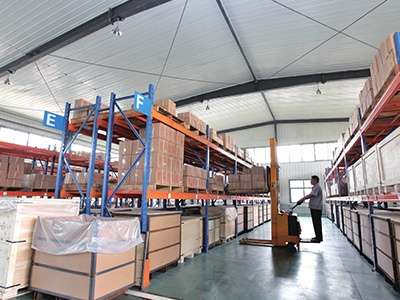
FAQ about casting material heat traceability
Is a heat number the same as a lot number?
No. A heat identifies a melting event or controlled melt quantity, while a casting, heat-treatment, inspection, or shipment lot groups product according to a defined rule. One heat can divide into several lots, and one later process load may contain multiple heats if permitted. Your RFQ should define which identifier controls certificate review and shipment release.
Does ISO 9001 certification define the exact traceability level?
No. A quality management system can support controlled processes and records, but the product-specific traceability level still comes from the contract, drawing, material standard, regulatory or code requirements, and customer clauses. If certification status matters to your project, request the current certificate and confirm its scope, issuing body, site coverage, and expiration date before approval.
Can PMI or spectrometer testing recover a lost heat number?
It may help verify elemental composition or identify a possible alloy grade, but it normally cannot identify the original melt heat or reconstruct heat treatment, repair, inspection, and handling history. Recovery requires an approved disposition based on the governing requirements. For critical parts, treat PMI as supporting evidence, not as permission to rebuild missing history casually.
Should a material certificate include heat-treatment records?
That depends on the material specification and purchase requirements. You should state whether a heat-treatment condition statement, furnace/load number, time-temperature chart, third-party processor certificate, hardness result, or other evidence is required and how it must link to each heat. Without that instruction, suppliers may provide very different certificate packages for the same alloy name.
How long should casting traceability records be retained?
Use the period required by the purchase order, customer specification, applicable code, regulation, and internal quality agreement. Define the period before production, together with record format, legibility, backup, retrieval time, and disposition after retention expires. For overseas sourcing, also clarify whether records must be available in English and how quickly they must be retrieved after shipment.
What should you check before accepting a material certificate?
Check that the certificate identifies the correct supplier, part number, drawing revision, material grade, heat or lot number, quantity, test basis, results, and authorized review. Then compare it with the packing list and part labels. A technically correct certificate is still weak evidence if it cannot be matched to the exact castings you received.
Final Thoughts
Material heat traceability is a practical risk-control system, not just a paperwork request. For custom investment castings, the safest time to define it is before quotation and tooling release. Matson can review your drawing, alloy specification, marking rules, inspection document needs, and packing requirements so the finished parts and records remain connected.
Request a material traceability review
Send Matson your drawing, cast alloy and specification, service requirements, marking rules, heat/lot definition, required inspection document, testing scope, outside-process clauses, record retention, and packing requirements. We can review whether the requested traceability chain is executable and identify missing inputs before quotation.
Email sales@matsoncasting.com or request a quote. Final material selection, certificate type, traceability level, testing, and acceptance remain subject to the buyer’s engineering and quality authority and the applicable specification.
— Matson Casting Team, Technical Xiao Li
Ready to Start Your Casting Project?
Send us your drawings or requirements and our engineering team will respond with a quote within 24 hours.
Send Your Inquiry Now →