Cobalt 6 is usually the better starting point when a valve or flow-control part needs a balanced combination of sliding-wear, galling, cavitation and impact resistance. Cobalt 12 is the stronger candidate when low-stress abrasion, low-angle particle erosion or severe metal-to-metal sliding is clearly dominant and the design can accept a harder, more carbide-rich alloy.
That is a screening answer, not a substitute for service data. For a Cobalt 6 vs Cobalt 12 wear resistance decision, hardness alone cannot predict component life. Particle shape, impact angle, mating material, contact stress, lubrication, temperature, corrosion and part geometry can reverse an apparently simple material ranking. An OEM drawing should therefore state the exact cast grade and specification—not only a family name or trade name—and define how the supplied material will be verified.

How do Cobalt 6 and Cobalt 12 compare?
Q: What is the practical difference between the two grades?
A: Cobalt 6 is the more balanced, general-purpose wear alloy. Cobalt 12 contains more carbon and tungsten, develops a larger fraction of hard carbides and is harder, which favors abrasion and severe sliding wear but creates a tougher trade-off where impact or chipping is a concern.
| Comparison point | Cobalt 6 | Cobalt 12 |
|---|---|---|
| Selection profile | Balanced general wear, galling, cavitation and impact resistance | Higher resistance to abrasion, low-angle erosion and severe sliding wear |
| Nominal carbon | 1.2% | 1.8% |
| Nominal chromium | 28.0% | 29.0% |
| Nominal tungsten | 4.5% | 8.5% |
| Listed room-temperature hardness | 36–46 HRC | 46–51 HRC |
| Main design caution | May not provide enough abrasion resistance for a strongly particle-driven failure | Higher hard-carbide fraction increases the importance of impact, chipping, section and machining review |
The chemistry and hardness figures above come from Deloro’s 2026 Stellite 6 and Stellite 12 material data sheets. They are useful product-form reference values, not automatic acceptance limits for every supplier, casting heat or Matson order. The purchase drawing must define the applicable material specification, chemistry limits, delivery condition and tests.
Matson’s cobalt alloy casting page lists Co106 / UNS R30006 / Cobalt 6 and Co112 / Cobalt 12 among its available grades. A listed capability still requires drawing, specification and service review before the material is approved for a particular part.
Why is the harder alloy not always the longer-lasting alloy?
Q: If Cobalt 12 is harder, why not specify it for every wear part?
A: Wear is a system response. A harder surface can resist scratching yet become less forgiving under impact, edge loading, misalignment or thermal stress. The part fails according to its actual contact and environment, not one hardness number.
Hardness tests indent a controlled surface. A valve seat, choke component or guide may instead experience sliding, particle impingement, corrosion, repeated impact and temperature cycling at the same time. Carbides that help resist abrasive cutting can also make a material less tolerant of concentrated impact or a thin unsupported edge. A higher grade cannot correct poor alignment, insufficient contact area, vibration, inadequate lubrication or a mating surface that is itself incorrectly specified.
Standard wear tests also need careful interpretation. ASTM G65, for example, uses a dry sand/rubber wheel to rank resistance to scratching abrasion under controlled conditions. ASTM explains that the result is comparative and does not reproduce every service variable. It cannot, by itself, predict life in wet slurry, corrosive gas, cavitating liquid or high-impact particle flow.
Which wear mechanism is damaging the valve part?
Q: What should engineers identify before choosing between Cobalt 6 and Cobalt 12?
A: Identify the dominant wear mechanism and the conditions that create it. “Worn out” is an observation; abrasion, erosion, galling, cavitation and impact are different engineering problems.
- Abrasion: hard particles or rough counterfaces cut or plow the surface. Record particle hardness, size, shape, concentration and whether contact pressure forces the particles across the part.
- Erosion: moving particles or droplets strike a surface. Velocity and impact angle are critical; a bend, restriction or throttling edge may see a very different attack from a straight passage.
- Sliding wear and galling: two contacting surfaces move under load and may transfer material or seize. Define mating alloys, contact stress, surface finish, clearance and lubrication.
- Cavitation erosion: collapsing vapor bubbles create repeated local surface damage. It is not equivalent to dry abrasion and should not be selected from hardness alone.
- Impact or repeated seating: concentrated loads can chip an edge or crack a brittle feature even when the broad wear surface looks acceptable.
- Corrosion-wear: chemical attack and mechanical removal interact. The medium, contaminants, temperature and electrochemical conditions can change the ranking.
Photograph the damaged component before cleaning it. Record where material loss begins, its direction, whether the surface is polished, grooved, pitted or chipped, and whether the mating part has also changed. If possible, compare the failed region with an unworn datum and preserve the material certificate. This evidence is more useful than asking a foundry to “make it harder.”
When is Cobalt 6 the better valve-part choice?
Q: What service profile favors Cobalt 6?
A: Cobalt 6 is a strong starting point when the component needs broad wear resistance with meaningful impact and cavitation tolerance rather than maximum abrasion hardness.
Deloro describes Stellite 6 as its most widely used, all-around cobalt wear alloy and lists valve seats and gates, pump shafts and bearings among representative applications. For OEM screening, this points engineers toward Cobalt 6 for seats, guides, sleeves, bushings or other moving interfaces where galling, cavitation, repeated contact and moderate erosion may occur together.
This does not mean every valve seat should be Cobalt 6. The alloy still has limited ductility compared with conventional structural steels, and pressure-containing design, minimum section, stress concentration and assembly method require review. If the previous part failed mainly through hard-particle abrasion and showed no impact or chipping risk, Cobalt 12 may deserve a controlled comparison.
When is Cobalt 12 the better wear-resistance choice?
Q: What failure evidence favors Cobalt 12?
A: Consider Cobalt 12 when the evidence points to severe sliding wear, low-stress abrasion or low-angle particle erosion and the part has enough support to manage its more carbide-rich structure.
Deloro’s data sheet states that Stellite 12 has a higher proportion of hard, brittle carbides than Stellite 6 and improved resistance to low-angle erosion, abrasion and severe sliding wear. Haynes International’s abrasion guidance for cast cobalt alloys similarly shows why increased carbon can improve low-stress abrasion resistance, while also warning that corrosion behavior and fabrication requirements affect the practical choice.
Suitable candidates may include supported trim surfaces, sleeves, bushings, nozzles or replaceable wear components where abrasive particles move along the surface and impact is limited. The word “may” matters: geometry, alloy specification, product form and operating conditions still control feasibility. A sharp lip or thin web can behave very differently from a thick supported ring made from the same heat.

How do impact, cavitation and edge chipping affect the choice?
Q: Which alloy is safer when impact cannot be excluded?
A: Cobalt 6 generally deserves the first evaluation because its balance includes better impact and cavitation tolerance, but no cobalt grade should be approved without checking the actual stress and geometry.
Review valve closing speed, actuator behavior, pressure transients, vibration, misalignment, foreign-object risk and the width of the contact band. An alloy can survive uniform sliding yet chip where load is concentrated on one edge. Small design changes—larger radii, better support, a wider contact area or corrected alignment—may improve life more than moving to a harder grade.
Cavitation needs separate attention. It involves repeated collapse events in a liquid and can create a characteristic pitted surface. A dry abrasion result does not rank cavitation performance. Ask whether the operating point, pressure drop or trim design can reduce the cause before treating alloy selection as the only remedy.
What about temperature and corrosion?
Q: Can room-temperature hardness decide a hot, corrosive application?
A: No. Use the normal, upset and cycling temperatures together with the actual medium, then evaluate hot hardness, oxidation, corrosion and thermal stress for the specified product form.
Both alloys are used where wear resistance must continue at elevated temperature, but the datasheet curves are reference information, not a universal design allowable. A component may also see chlorides, sulfur compounds, acids, steam, seawater or process chemicals. Corrosion can remove the matrix around hard particles and change the wear response. Request corrosion data relevant to the real chemical composition and temperature rather than assuming that cobalt content alone guarantees compatibility.
Rapid heating, cooling or temperature gradients also create stress. Thin-to-thick transitions, constrained assembly and dissimilar mating materials can magnify it. The designer should review thermal expansion, clearance and startup/shutdown cycles along with steady-state temperature.
Are solid investment castings and cobalt hardfacing interchangeable?
Q: Does choosing Cobalt 6 or Cobalt 12 also choose the manufacturing route?
A: No. A solid investment casting and a hardfaced steel component use the alloy in fundamentally different forms and need different drawings, qualification and inspection.
A solid casting carries the selected alloy through the component cross-section. It can form complex near-net geometry and avoid an overlay interface, but alloy cost, casting behavior and machining difficulty make section design and machining allowance important. Hardfacing protects a local surface while a base alloy supplies most of the structure. That route adds controls for substrate, deposition process, dilution, layer thickness, fusion, cracking, finishing and repair.
Do not compare a wrought test bar, cast coupon and deposited overlay as if their values were automatically interchangeable. Product form, process history, microstructure and test orientation matter. A drawing should state whether the part is a solid casting or an overlay system and identify the governing specification for that route.
For a broader explanation of when a solid cobalt component may be appropriate, see Matson’s guide to cobalt alloy casting for oil and gas wear parts. This article addresses the narrower grade-selection question; it does not replace the application-level review.
What must be reviewed for an investment-cast Cobalt 6 or Cobalt 12 part?
Q: Can an existing steel casting drawing simply change its material note?
A: Usually not safely. The casting supplier should review geometry, feeding, section transitions, shrinkage risk, machining stock, datum strategy and inspection access for the selected cobalt grade.
Investment casting can reduce machining on profiles, passages and bosses, but sealing faces, bores, threads and close geometric relationships may still need CNC finishing. Matson lists general investment-casting capabilities of 0.005–80 kg, maximum size of 650 × 650 mm, ISO 8062 CT4–CT6 general dimensional tolerance and Ra1.6–Ra3.2 surface roughness. These are screening capabilities, not automatic guarantees for a cobalt wear component. Final capability depends on the drawing, alloy, section and acceptance criteria.
Useful design-review questions include:
- Are there sharp internal corners, isolated heavy sections or abrupt wall transitions?
- Is the wear surface supported, and can it tolerate local edge loading?
- Which surfaces remain as-cast, and which need turning, milling, grinding or lapping?
- Are machining stock, datums, runout, concentricity and final surface finish defined?
- Can critical internal features be inspected by the specified method?
- Are weld repair, blending and material substitution rules stated?
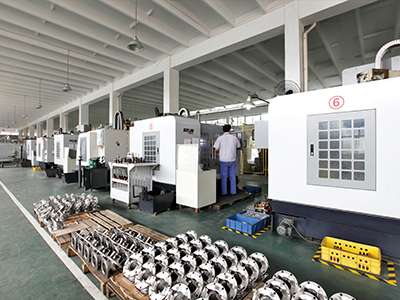
Matson has more than 60 CNC machines, but machine count does not prove a particular finish or tolerance. The complete drawing review must confirm tool access, workholding, stock distribution, measurement method and production volume. See Matson’s investment casting for valve parts capability for the wider valve-manufacturing context.
How should the grade and wear-critical features be verified?
Q: What prevents the wrong cobalt grade from reaching assembly?
A: A controlled material callout, heat or lot traceability, chemistry verification and an agreed inspection plan provide the core evidence. Visual appearance cannot distinguish the grades.
The RFQ should identify the exact grade, standard and revision; required condition; chemistry limits; certificate type; hardness locations and method; and whether microstructure, mechanical tests or additional product-form tests are required. If “Cobalt 6,” “Co106,” “UNS R30006” or a trade designation is used, confirm that all parties mean the same cast specification. Trade names, generic shorthand and UNS identifiers are not permission to substitute an unapproved product form.
Dimensional and nondestructive inspection should follow function and risk. Matson’s available inspection resources include spectrometer chemistry analysis, CMM, X-ray, ultrasonic testing and magnetic particle testing. The selected method must be technically suitable for the alloy, geometry and discontinuity type. Specify sampling, acceptance standard, severity level, report format and retention rather than writing only “NDT required.”
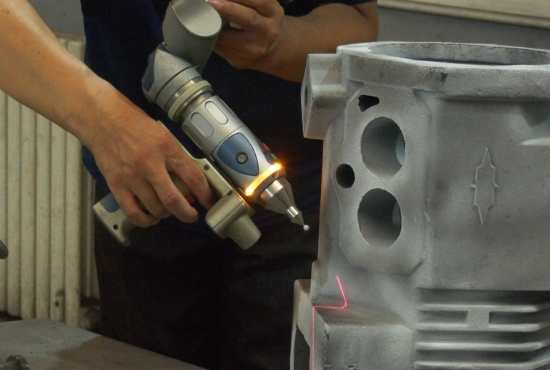
Matson’s investment casting quality-control guide explains how material, process, dimensional and NDT evidence should connect to final release.
What should an OEM send for a Cobalt 6 vs Cobalt 12 review?
Q: What information allows a foundry to make a useful recommendation?
A: Send the component definition, service conditions, failure evidence and acceptance requirements together. A part name and target hardness are not enough.
- Controlled definition: 2D drawing, 3D model, revision, critical characteristics and end use.
- Material route: exact cast grade and specification, or complete hardfacing system if an overlay is being compared.
- Flow and medium: liquid or gas chemistry, contaminants, particle size, hardness, shape and concentration.
- Operating conditions: velocity, pressure, pressure drop, impact angle, temperature range, thermal cycles and duty cycle.
- Contact system: mating material, contact stress, movement, alignment, clearance, surface finish and lubrication.
- Failure evidence: service hours or cycles, wear map, photographs, dimensional loss, fracture or chip location and previous material certificate.
- Manufacturing scope: casting only, rough machining or finished part; heat treatment, surface treatment, lapping and cleaning requirements.
- Quality plan: chemistry, hardness, dimensions, microstructure or mechanical tests, NDT method, sampling and report package.
- Commercial profile: trial quantity, expected production quantity, delivery location, target schedule and packaging.
There is no fixed MOQ at Matson; prototype and production orders can be reviewed. A trial order should validate the complete material, casting, machining and inspection route before a volume commitment. For critical service, the buyer remains responsible for final design approval and compatibility with the governing valve, pressure-equipment or end-user specification.
Frequently asked questions about Cobalt 6 vs Cobalt 12
Is Cobalt 12 always more wear resistant than Cobalt 6?
No. Cobalt 12 is generally harder and better suited to low-stress abrasion, low-angle erosion and severe sliding wear, but service life depends on impact, cavitation, corrosion, temperature, geometry and the mating system. Cobalt 6 may last longer where a more balanced response is needed.
Which grade is better for valve seats?
Cobalt 6 is a common starting point for valve-seat evaluation because it balances galling, wear, cavitation and impact resistance. Cobalt 12 may be considered when abrasive or severe sliding wear clearly dominates. Seat load, closing impact, leakage class, mating material and finish must be reviewed before selection.
Can Rockwell hardness confirm the alloy grade?
No. Hardness is one acceptance characteristic and ranges can overlap because of chemistry, process and measurement variation. Grade identity should be supported by the specified chemistry, heat or lot traceability, material certificate and any additional tests required by the purchase specification.
Can Cobalt 6 be replaced with Cobalt 12 without changing the drawing?
Not automatically. The change can affect casting behavior, machining, edge reliability, mating wear, inspection and cost. Treat it as an engineering and supplier change with documented review, qualification and buyer approval.
Should wear testing be included in every purchase order?
Not necessarily. Standard production control often focuses on chemistry, hardness, dimensions, traceability and specified NDT. A project-specific wear test may be useful during development when its mechanism represents the real service, but its method and acceptance limits must be agreed before quotation.
Request a Cobalt 6 or Cobalt 12 casting review
Matson Casting supplies custom cobalt-alloy investment castings, CNC machining, inspection and export support for overseas OEM projects. We can review whether Cobalt 6, Cobalt 12 or another approved route fits the documented wear mechanism and component geometry.
Email sales@matsoncasting.com or request a quote. Include the drawing, exact material requirement or current certificate, service conditions, failure photographs, machining scope, inspection plan and expected quantities.
— Matson Casting Team, Technical Engineer Li
Ready to Start Your Casting Project?
Send us your drawings or requirements and our engineering team will respond with a quote within 24 hours.
Send Your Inquiry Now →