Ceramic Shell Building in Investment Casting: What OEM Buyers Should Audit
Ceramic shell building in investment casting determines whether the wax assembly becomes a stable, clean mold for metal pouring. The work looks repetitive—dip, drain, apply refractory stucco, dry, and repeat—but each coat must be compatible with the wax surface, the next layer, the part geometry, dewaxing, and the pouring conditions.
For an OEM buyer, the useful question is not “How many shell layers do you apply?” A fixed number without context says little. A stronger audit asks how the foundry controls slurry condition, coating coverage, drainage, stucco application, drying environment, handling, shell inspection, and batch traceability for the specific part and alloy.

What happens during ceramic shell building in investment casting?
Q: What are the basic shell-building steps?
A: A prepared wax tree is coated with ceramic slurry, covered with refractory stucco, allowed to dry, and recoated until the mold has the required construction for the casting route.
The Investment Casting Institute describes the ceramic shell as a laminated mold built around the wax assembly. The finished shell must retain the wax pattern’s surface and geometry, survive handling and wax removal, and withstand the thermal and mechanical stresses of metal pouring.
The first coat contacts the wax and forms the future casting surface. Its coverage around lettering, radii, holes, pockets, thin edges, and pattern joints matters. Subsequent coats develop the body of the shell. The final construction depends on the shell system, tree size, part geometry, alloy, pouring method, and foundry process qualification.
That is why Matson does not publish one universal shell recipe for every RFQ. Stainless steel, carbon steel, alloy steel, nickel alloy, and cobalt alloy projects can impose different requirements. A production traveler should connect the approved route to the part number, drawing revision, material, tooling, and batch.
Which shell-building controls should an OEM buyer review?
Q: What evidence separates a controlled process from a verbal description?
A: Look for defined checks, recorded results, acceptable ranges, reaction plans, and traceability to the production batch.
| Control area | What can change | Useful audit evidence |
|---|---|---|
| Wax-tree release | Pattern damage, poor joints, contamination, wrong assembly | Approved tree layout, inspection record, batch identification |
| Slurry condition | Composition, solids condition, viscosity behavior, contamination | Check method, frequency, results, adjustment and hold rules |
| Dip and drainage | Incomplete coverage, trapped slurry, bridging, uneven buildup | Work instruction, tree orientation, operator or automation controls |
| Stucco application | Uneven coverage, damaged wet coat, foreign material | Material identity, storage controls, application standard |
| Layer drying | Humidity, airflow, temperature, geometry-dependent moisture retention | Room records, drying criteria, alarms and deviation response |
| Shell release to dewax | Cracks, weak areas, damaged edges, incomplete drying | Final shell inspection, repair rules, rejection record |
The buyer does not need the supplier’s confidential formula. The buyer does need confidence that the formula and operating window are controlled, changes are approved, and out-of-range material is not silently returned to production.
Why does slurry control matter?
Q: Is slurry simply a bucket of ceramic liquid?
A: No. It is a managed suspension whose condition affects coating behavior, layer bonding, surface replication, drying, and shell performance.
Investment casting slurries combine refractory material with a binder system and other controlled components. The exact formulation is process-specific. The relevant shop-floor question is whether the foundry measures the characteristics it has identified as important and uses defined methods to maintain them.
Ask how new material is identified and released, how additions are documented, how the tank is mixed, how contamination is prevented, and what happens after a check falls outside the approved range. Also ask whether the foundry trends results. A value that remains technically acceptable but drifts steadily can still signal a developing process problem.
The Investment Casting Institute’s technical material on slurry analysis emphasizes that colloidal-based slurries require appropriate test methods and testing frequency. A buyer audit should therefore sample real records from an active or completed batch instead of accepting a blank form as proof.
How do geometry and wax-tree design affect coating?
Q: Why can two parts need different shell-building instructions?
A: Their pockets, holes, spacing, orientation, section changes, and tree layout can drain and dry differently.
A simple open shape allows slurry and air to move more freely. A crowded tree with blind pockets, narrow gaps, deep recesses, or surfaces facing each other may retain slurry, bridge openings, or dry unevenly. The operator or automated program must present the tree to the bath and stucco stream in a repeatable way.
Pattern spacing also matters. Parts must leave enough room for coating, stucco, drainage, drying, and later shell removal. Wax joints should be smooth and complete so the coating does not create weak or irregular areas around the gate connection.
During DFM, identify features where ceramic access or removal may be difficult. The solution may involve changing orientation, adjusting the tree, adding drainage, revising a radius, or reviewing whether a core or another manufacturing approach is required. These decisions should be made before the wax die and production route are frozen.
What controls ceramic shell drying?
Q: Can a foundry use one drying time for every coat and every tree?
A: A clock alone is not enough. Drying behavior depends on the environment, coating, geometry, shell system, and the moisture path within the layer.
Research presented through the Investment Casting Institute identifies temperature, humidity, airflow, part geometry, and the shell system as important drying factors. Air that moves too little may not remove moisture effectively. Uncontrolled air directed at one surface can also create uneven conditions. Deep features and crowded areas may retain moisture longer than exposed surfaces.

A buyer should ask how room conditions are monitored, where sensors are located, how records are linked to batches, and what happens after an alarm or power interruption. The work instruction should also explain how the operator determines readiness for the next coat or for dewaxing.
Do not force the quotation to promise an unverified universal drying duration. That encourages a number that may not fit the part. Request a qualified route and evidence that the foundry follows it consistently.
How can shell problems affect finished castings?
Q: Does every casting defect come from the ceramic shell?
A: No. Wax, shell, melting, pouring, solidification, finishing, heat treatment, and machining can produce similar-looking symptoms. Root cause must be investigated with process evidence.
Shell cracks can allow metal to create fins or more serious leakage. Weak adhesion between coats may contribute to spalling. Loose ceramic can become a nonmetallic inclusion. Poor drainage or coating buildup can alter a feature. Surface roughness may reflect the prime coat, wax condition, contamination, or later cleaning.
These are risk relationships, not automatic diagnoses. When a nonconformance occurs, review the affected location, tree position, heat and batch history, shell-room records, dewax and burnout route, pouring data, and inspection results. Preserve samples or photographs when they help the investigation.
Matson’s guide to investment casting quality control explains how dimensional records, material traceability, NDT, and final documentation fit around these process controls.
What should happen before dewaxing and pouring?
Q: Is a dry-looking shell automatically ready for metal?
A: No. It must pass the foundry’s release checks, then complete the approved dewax, burnout, inspection, and preheat route.
Before dewaxing, personnel should identify cracks, damaged edges, blocked openings, contamination, or handling damage according to the work instruction. Repair may be allowed for defined conditions, but the method and acceptance authority must be controlled. A shell outside the repair standard should be rejected rather than patched by personal judgment.
Dewaxing removes the wax and exposes the inside of the ceramic mold. Burnout and preheating prepare the shell for pouring according to the qualified process. The shell must remain identified through these stages so the material heat, pour batch, and resulting castings can be traced back to the correct order.
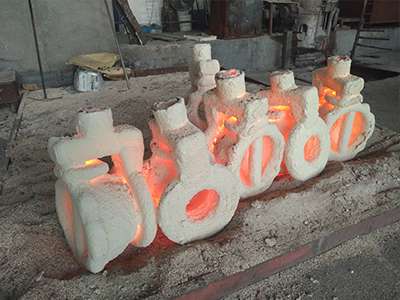
Our investment casting factory tour in China follows the broader route from wax pattern to finished component. The shell-room audit in this article is a deeper check within that complete process.
What should overseas buyers check during a shell-room audit?
Q: What can an OEM team verify in a short supplier visit?
A: Follow one representative part and one real batch through people, materials, equipment, records, and reaction plans.
- Confirm the traveler identifies the part, revision, tooling, alloy, tree, and shell route.
- Compare the wax-tree condition with the release standard before coating.
- Review slurry and stucco material identity, storage, checks, additions, and change control.
- Observe whether dip, drain, and stucco application match the work instruction.
- Check room-condition monitoring, alarms, record retention, and backup response.
- Ask how complex pockets, holes, and crowded trees are drained and dried.
- Review shell damage, repair, rejection, and nonconformance examples.
- Trace a completed shell record forward to dewax, pour, inspection, and shipment records.
North American OEM buyers may emphasize controlled drawings, first-article evidence, and change notification. European importers may add customer-specific quality and material documentation. Buyers in the Middle East may focus on corrosion-resistant pump and valve parts, NDT scope, and export records. The shell-building process remains the same category of work, but the required evidence must match the purchase specification.
What information belongs in the RFQ?
Q: Does the buyer need to specify the foundry’s shell formula?
A: Usually no. Specify the product and verification requirements, while requiring the foundry to use a qualified and controlled manufacturing route.
Send the 3D model, controlled 2D drawing, exact cast material grade, order quantities, annual demand, critical features, surface requirements, heat treatment, machining, inspection, NDT, certificate, traceability, marking, and packaging requirements. Highlight blind features, internal passages, thin edges, and surfaces where retained ceramic would be unacceptable.
For custom investment casting, Matson reviews wax tooling, tree layout, shell feasibility, machining stock, and inspection requirements before confirming the production route. The applicable controls depend on the actual component; we do not substitute generic shell parameters for a drawing review.
FAQ about ceramic shell building
How many ceramic shell layers does investment casting need?
There is no reliable universal number for every part. The shell construction depends on the process system, tree size, geometry, alloy, handling, dewaxing, and pouring conditions. Ask the foundry to qualify and control the route for the specific component.
Why is stucco applied after dipping?
Stucco is applied to the wet slurry coat as part of building the laminated ceramic mold. The refractory grade and application method can differ by layer and shell system, so material identity and process instructions must be controlled.
Can incomplete drying cause casting problems?
Incomplete or uneven drying can weaken the intended shell-building route and create risk during later coats, handling, dewaxing, burnout, or pouring. A foundry should monitor relevant environmental conditions and use qualified release criteria rather than relying only on elapsed time.
Does automation guarantee consistent ceramic shells?
Automation can improve repeatability of movement and timing, but it still requires controlled slurry, stucco, environment, tree design, equipment maintenance, programs, inspection, and reaction plans. Manual and automated systems both need process evidence.
Can a buyer audit the shell process without receiving the formula?
Yes. The audit can verify material control, test methods, operating records, environmental monitoring, work instructions, training, traceability, nonconformance handling, and change control without requesting confidential formulation details.
Request a ceramic shell process review
Send Matson your CAD model, drawing, alloy, quantities, critical surfaces, inspection requirements, and service conditions. We can review whether the geometry is suitable for wax assembly, ceramic coating, drying, dewaxing, pouring, cleaning, and any required CNC machining.
Email sales@matsoncasting.com or request a quote. Any project-specific shell parameters will be confirmed through engineering review rather than assumed from a generic article.
— Matson Casting Team, Site A-Ming
Ready to Start Your Casting Project?
Send us your drawings or requirements and our engineering team will respond with a quote within 24 hours.
Send Your Inquiry Now →