The right pump body casting material is determined by the pumped fluid, temperature, pressure, solids content, and expected service life — not by unit price alone. For most OEM projects, carbon steel, stainless steel, brass or bronze, and nickel-based alloys each solve a different corrosion, wear, strength, and cost problem.
This guide gives pump manufacturers, distributors, and sourcing teams a practical way to narrow the material choice before requesting a quote. It also explains what a foundry needs from your drawing and service data to produce a pump housing that can be machined, inspected, and repeated across production batches.
Start With the Pumped Fluid, Not the Cheapest Alloy
Q: What information should an OEM buyer review before selecting a pump body material?
A: Start with the full liquid composition, operating temperature, pressure, suspended solids, flow conditions, cleaning chemicals, and expected maintenance interval. A material name without this service data is only a guess.
A pump body is a pressure-containing component with internal passages, sealing faces, flanges, and machined fits. The wetted surfaces may see corrosion while the casing also carries mechanical loads from piping, fasteners, and the rotating assembly. That combination is why a material that works for a bracket or general machine housing may not be suitable for a pump casing.
Before choosing a grade, confirm these five items:
- Fluid chemistry: Record the main liquid, concentration range, pH, chlorides, cleaning agents, and possible contaminants. Wastewater and process fluids can change between operating cycles.
- Temperature range: Give normal, startup, cleaning, and upset temperatures. Corrosion behavior and mechanical properties can change as temperature rises.
- Solids and abrasion: Sand, crystals, fibers, and other particles can attack internal surfaces even when the base liquid is not strongly corrosive.
- Pressure and geometry: Include the design pressure, flange load, wall-thickness requirements, and any pressure-test specification on the drawing.
- Service-life target: A low initial casting price does not help if corrosion, erosion, or repeated seal-face rework shortens the maintenance interval.
A simple RFQ example: a buyer asks for a 316 pump housing but provides only an outside diameter and annual quantity. The foundry still does not know whether the pump handles clean water, chloride-bearing liquid, food product, or an aggressive chemical. The correct next step is not to confirm 316 immediately. It is to request the fluid composition, temperature, pressure, drawing standard, and inspection requirements.

Pump Body Casting Material Comparison
Q: Which material families are available for an investment cast pump housing?
A: Matson Casting works with carbon steel, stainless steel, nickel-based alloys, brass, bronze, and copper. The best choice depends on corrosion exposure, mechanical demand, machinability, inspection scope, and total lifecycle cost.
| Material Family | Available Grades / Standards | Where It Fits | Buyer Should Confirm |
|---|---|---|---|
| Carbon steel | WCA, WCB, WCC, A27, LCA, LCB, LCC | General industrial pump bodies where the liquid is compatible with carbon steel | Corrosion allowance, coating plan, fluid chemistry, and low-temperature requirements |
| Stainless steel | CF3, CF3M, CF8, CF8M, CG8M, CA15; 304, 316, 304L, 316L | Water, food processing, petrochemical, medical, and other corrosion-sensitive service | Exact media, chloride exposure, cleaning cycle, and whether a low-carbon grade is required |
| Brass / bronze / copper | Project-specific alloy to be confirmed from the drawing | Pump components where corrosion resistance and machinability are important | Water chemistry, galvanic compatibility, pressure, and the exact alloy designation |
| Nickel-based alloy | CY-40 / Alloy 600, CW-6MC / Alloy 625, Alloy 718, CW-6M / Alloy C276 | High-temperature or strongly corrosive chemical and marine applications | Chemical concentration, temperature, inspection level, and cost justification |
For buyers comparing pump housing investment casting options, the material name should follow the service data. A brass pump casting request, for example, still needs an exact alloy designation, water chemistry, pressure, and mating-metal information before it is ready to quote.
For many OEMs, stainless steel is the first material family to evaluate because the available grades cover a broad range of pump-body conditions. Matson’s stainless steel investment casting capability includes ASTM, EN, BS, and JIS grades. The drawing should still name the required grade and standard rather than using a loose description such as “stainless.”
Brass, bronze, and copper also appear in pump programs, but they should not be treated as interchangeable names. Use the exact alloy designation and confirm the pumped fluid and mating metals. Buyers evaluating these material families can review Matson’s brass investment casting capability before sending the RFQ.

Where Investment Casting Fits a Pump Housing
Q: When is investment casting a practical process for a pump body?
A: It is a strong option when the housing has complex ports, curved passages, bosses, mounting features, or near-net geometry that would create excessive machining from solid stock. The part must also fit the foundry’s size, weight, alloy, and inspection capability.
Matson Casting produces investment castings up to 650mm × 650mm and within a 0.005–80kg casting weight range. Standard dimensional capability is ISO 8062 CT4–CT6, with Ra1.6–Ra3.2 surface roughness listed in the production capability. The website FAQ also gives a typical precision reference of ±.005 per linear inch, angular tolerance of ±1/2 degree, and 120 RMS surface finish.
Those figures are a starting point, not permission to leave the drawing vague. A pump housing usually contains a mix of cast and machined requirements. Flange faces, seal bores, bearing locations, bolt patterns, and shaft-related datums often need finish machining. Internal passages and non-critical exterior surfaces may remain as cast. Mark the difference clearly.
Matson has 60+ CNC machines covering turning, milling, drilling, and grinding. Its machining envelope reaches a 1.5-meter cube and 2,500kg, which supports work beyond the casting-only envelope when a project includes larger assemblies or related machined components. For a pump housing, the important point is simpler: casting and machining can be reviewed together, reducing the handoff risk between two unrelated suppliers.
The investment casting service page gives the broader process and capability context. For the application itself, the pump body casting page shows the relevant pump-component direction.

What to Put in a Pump Body Casting RFQ
Q: What does a foundry need to quote an OEM pump housing correctly?
A: Send the drawing and 3D model, exact material standard, service conditions, machined-dimension requirements, inspection plan, quantity, and delivery schedule. Missing service data usually creates more risk than a missing price target.
A complete RFQ should include:
- Drawing and 3D data: Identify the revision, units, general tolerances, casting datums, machining datums, and critical-to-function dimensions.
- Material specification: State the grade and standard. If you want the foundry to recommend a material, provide the full fluid and operating data instead of naming only a broad family.
- Pressure information: Give design pressure, test pressure, pressure-containing boundaries, and any acceptance criteria required by your program.
- Machining scope: Mark seal bores, gasket faces, threaded ports, flange faces, bearing seats, and surfaces that must remain untouched.
- Inspection documents: Specify whether you need material certificates, CMM reports, spectrometer results, tensile testing, low-temperature testing, X-ray, MPT, or UT.
- Quantity profile: Separate prototype, trial batch, and production demand. Matson has no fixed MOQ and supports both small trial orders and larger production batches.
- Packaging and traceability: Define heat-number traceability, part marking, corrosion protection, and export packaging expectations.
Do not send a finished-machining drawing and assume the foundry will automatically calculate every casting allowance. Clearly identify which dimensions apply to the raw casting and which apply after CNC machining. That single distinction prevents avoidable discussions about wall stock, datum transfer, and inspection responsibility.
How to Qualify the Foundry Before Production
Q: How can an overseas buyer reduce pump-housing quality risk before placing a production order?
A: Qualify the material, dimensions, internal integrity, and machining process in stages: document review, first article, small trial batch, then production approval.
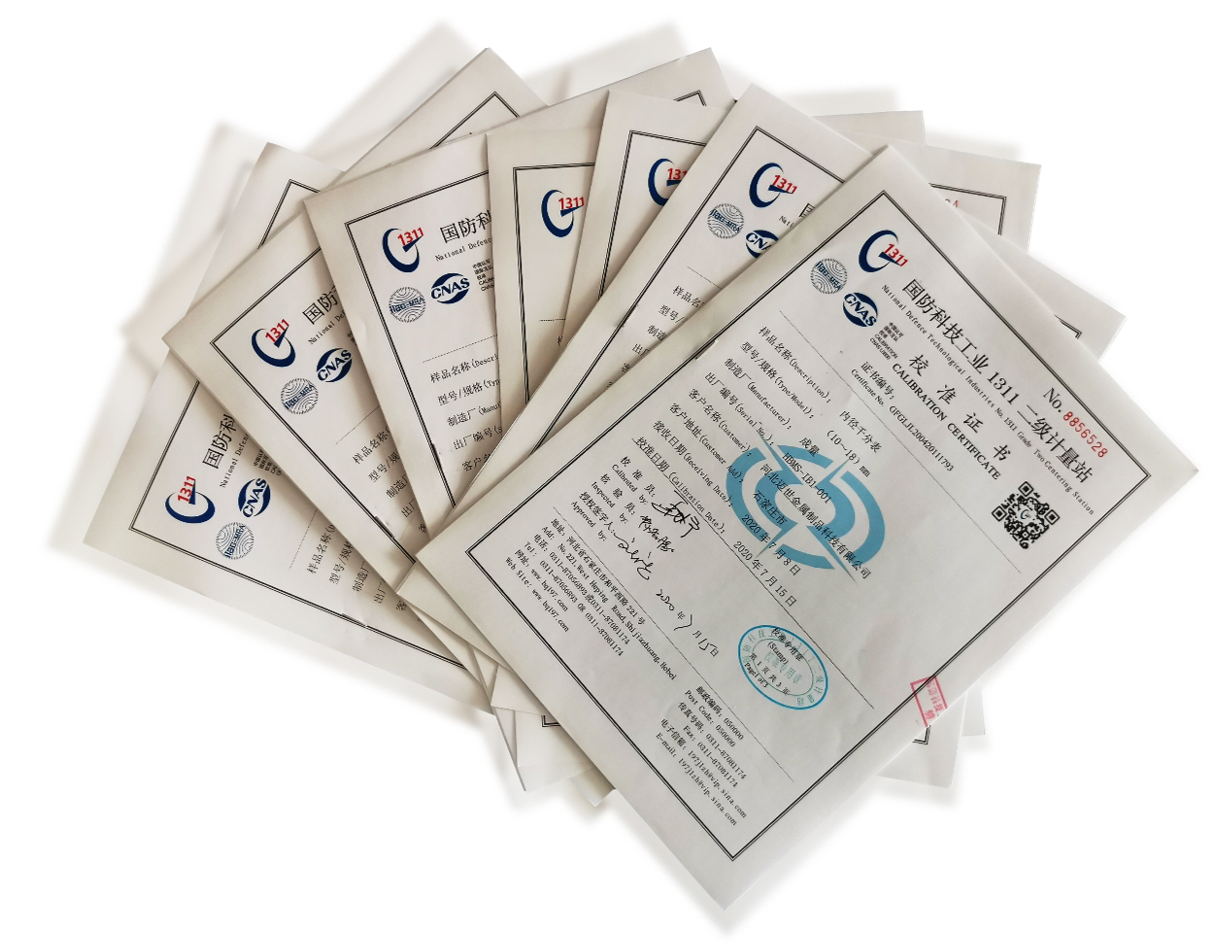
Start with the material certificate and confirm that the grade on the document matches the drawing. A spectrometer can verify chemistry. Depending on the alloy and project, a metallographic microscope, tension tester, or low-temperature tester may form part of the inspection plan. Pressure-containing or critical sections may also require X-ray, MPT, or UT when specified.
Dimensional review should cover more than the outside envelope. Ask for a CMM report tied to the drawing revision and inspection datum system. Review flange relationships, bore locations, port angles, sealing faces, and machining stock. If the part has a complex internal passage, agree on the inspection method before tooling begins.
A small trial batch is especially useful when qualifying a new material or transferring a part from another foundry. It lets the buyer test assembly, leakage, machining repeatability, and incoming inspection before production volume increases. Because Matson does not impose a fixed MOQ, the trial and production stages can be quoted separately.

Material Selection Questions From Different Buyer Regions
Q: Do European, Middle Eastern, and North American pump buyers ask for different information?
A: The engineering fundamentals are the same, but the drawing standard, alloy designation, documentation format, service environment, and approval process often differ.
European OEM buyers may provide EN grades and expect a clear cross-reference when a foundry quotes an ASTM or JIS alternative. Matson’s material library includes ASTM, EN, BS, and JIS stainless grades, but an equivalent must never be substituted without buyer approval.
Middle East pump distributors often handle water, energy, marine, and chemical applications. Their RFQs should state actual temperature, salinity or chemical concentration, pressure, sand or solids exposure, and the maintenance environment. A generic phrase such as “desert service” or “seawater use” is not enough to lock a material.
North American OEM buyers commonly work from ASTM material calls and drawing-specific inspection plans. The foundry should quote against the named standard and list any requested certificates, dimensional reports, and NDT records as separate deliverables. This makes the technical comparison between suppliers much cleaner than comparing unit prices alone.
FAQ
What is the best material for a pump body casting?
There is no universal best material. Carbon steel, stainless steel, brass or bronze, and nickel-based alloys serve different fluids and operating conditions. Send the liquid composition, temperature, pressure, solids content, and service-life target before confirming the grade.
Can Matson machine the pump housing after casting?
Yes. Matson has 60+ CNC machines covering turning, milling, drilling, and grinding. Mark all sealing faces, bores, threads, flange surfaces, and critical datums on the drawing so the casting and machining scope can be reviewed together.
What tolerances can be used for an investment cast pump body?
Matson lists ISO 8062 CT4–CT6 as its standard dimensional capability. Its FAQ also gives a typical precision reference of ±.005 per linear inch and angular tolerance of ±1/2 degree. Critical machined dimensions should be identified separately on the drawing.
Do you require a minimum order quantity?
No fixed MOQ is required. Small trial orders and larger production batches are both supported, which allows an OEM buyer to qualify a new pump housing before scaling volume.
Which inspection methods are available for pump castings?
Matson’s in-house inspection equipment includes a spectrometer, metallographic microscope, tension tester, low-temperature tester, X-ray tester, MPT, UT, and CMM. The required methods should be stated in the RFQ and matched to the part’s risk level.
Send Your Pump Body Drawing for Review
Q: What should you send to start a pump body casting review?
A: Send the drawing, 3D model, material requirement, pumped-fluid data, operating temperature and pressure, machining scope, inspection plan, and expected quantities.
Matson Casting will review the material, casting geometry, machining datums, and inspection requirements as one package. Email sales@matsoncasting.com or request a quote through the website.
—— Matson Casting 团队 技术小李
Ready to Start Your Casting Project?
Send us your drawings or requirements and our engineering team will respond with a quote within 24 hours.
Send Your Inquiry Now →